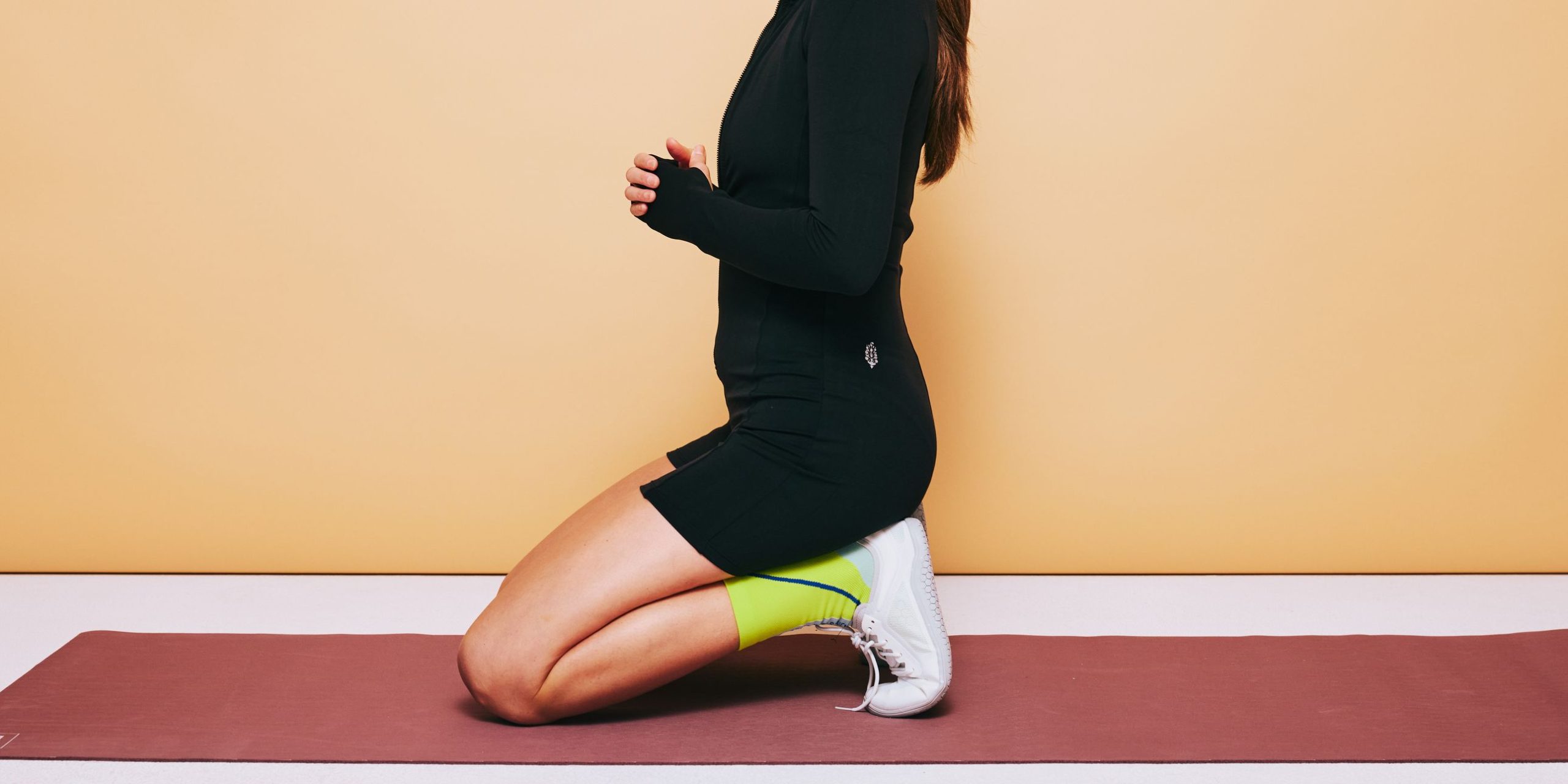
Tight. Achy. Sharp. Stabbing. There are many disagreeable phrases that describe ache on the underside of your foot. Fortunately, plantar fasciitis workouts can go a good distance in relieving that discomfort. Actually, energy strikes and stretches are a very efficient strategy to deal with this widespread situation, making at-home aid a actuality.
It sucks to have PF, however in case you’ve been tormented by it, you’re undoubtedly not alone: Hundreds of thousands of Individuals wrestle with heel ache yearly, and plantar fasciitis is the commonest trigger. We tapped a bodily therapist and a podiatrist for a primer on all issues plantar fasciitis, together with what it’s, what causes it, and most crucially, what particular workouts can convey you—and your barking tootsies—a much-deserved break.
So what even is plantar fasciitis, and what causes it?
First, let’s begin with the plantar fascia: It’s a band of tissue on the underside of your foot that extends from the heel all the way in which as much as your toes, splaying out because it reaches the highest, Winnie Yu, PT, DPT, CSCS, a NYC-based bodily therapist and energy coach at Bespoke Bodily Remedy, tells SELF. The plantar fascia helps soak up shock while you stroll, run, and carry out high-impact actions like leaping. It additionally helps the arch of the foot, although that’s not its major job, Dr. Yu explains.
So what’s plantar fasciitis? Properly, it’s when this tissue will get overloaded and turns into infected and painful consequently. You may stress your fascia by doing an excessive amount of train in your forefoot, Stephen M. Pribut, DPM., a Washington DC–primarily based podiatrist and affiliated school with the biomedical engineering division at George Washington College, tells SELF. Assume: leaping jacks, hill sprints, and bounding on a trampoline, since these motions can overload the world, in addition to all of a sudden ramping up a strolling or operating program with out giving your physique sufficient time to get better, he provides.
Tightness within the calves might be one other offender, since that muscle group is hooked up to your heel, which implies further stress there can yank on the plantar fascia, Dr. Yu explains. Past that, operating or strolling uphill and shifting on uneven surfaces can place further stress on the tissue, and particular foot anatomy can play a task too: Of us with flat ft or excessive arches can stroll in patterns that overload the plantar fascia, as SELF beforehand reported.
As for the way it feels, there’s one often-cited hallmark: “It might begin off as a pointy ache that’s current within the first couple steps within the morning,” Dr. Yu explains. From there, it may progress to ache felt each time you stand up after being sedentary for some time. And in extreme circumstances, it may damage each time you’re taking a step, inflicting you to limp while you stroll, Dr. Pribut says.
What’s one of the best ways to deal with plantar fasciitis?
When you could have plantar fasciitis, the underside of your foot typically feels suuuper tight. “Your pure inclination is to need to stretch it as a result of it feels so freaking restricted,” Dr. Yu says. That response isn’t unsuitable—the truth is, stretching your calves, in addition to the tissue itself, “may be very helpful,” Dr. Yu says. That’s as a result of by easing tightness in and across the plantar fascia, you may scale back stress on the tissue. Nevertheless, stretching shouldn’t be the solely method.