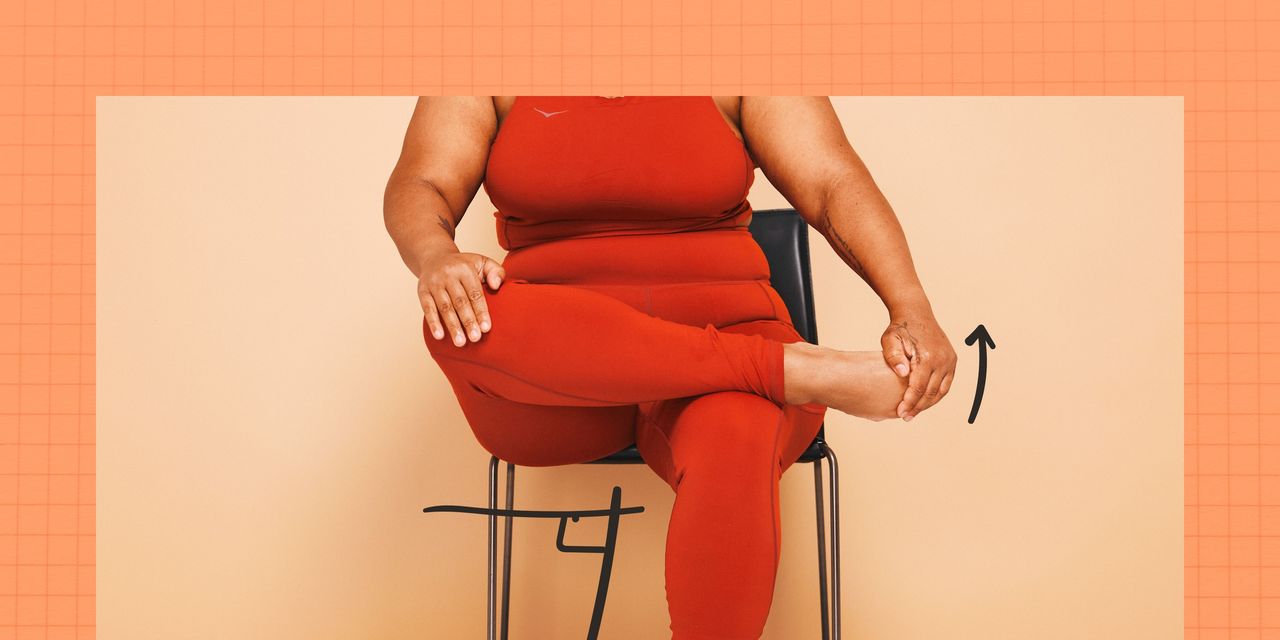
Tight, achy shins can mess along with your train routine…and no matter else is in your agenda, like strolling along with your pup or climbing stairs. However with a seated shin stretch, you’ll be able to ship candy reduction to your barking legs—and all you want is a chair to get it completed.
We tapped Femi Betiku, PT, DPT, CSCS, a bodily therapist and Pilates teacher in Westchester, New York, to know what causes shin tightness within the first place, the best solution to stretch this space, and the perks of doing so. We additionally bought his enter on a simple-yet-seriously efficient seated shin stretch you’ll be able to attempt at the moment. Prepared for fast reduction? Right here’s the at-home answer your achy legs have been begging for.
Why do shins get tight?
First, let’s get clear on what your shins are. Technically, the shin is a bone known as the tibia, which extends from beneath your knee to the ankle. A muscle, often known as the tibialis anterior, runs proper alongside the tibia, on the entrance a part of your decrease leg.
Whenever you really feel tightness on this space, it’s normally the results of the tibialis anterior getting overworked, which causes tiny fibers of that muscle to start out pulling on the bone, Dr. Betiku explains. This, in flip, results in irritation within the space. Now, the irritation itself isn’t an issue. “It’s okay if it’s infected,” Dr. Betiku says—so long as it’s a brief factor and the muscle fibers go on to heal. However when that doesn’t occur, and the irritation simply sticks round, then that’s what can carry on the feeling of lingering tightness and/or ache, he explains. The truth is, there’s a reputation for this: shin splints, or medial tibial stress syndrome in medical-speak.
Shin splints are widespread amongst runners, particularly those that simply ramped up their coaching, since that may pressure the tibialis anterior into overdrive. “Additionally it may occur with individuals who simply began a brand new strolling program,” Dr. Betiku provides. Strolling or operating uphill, or on uneven or arduous surfaces, may also overwork the tibialis anterior, triggering shin tightness and ache.
Folks with flat ft and people with hip tightness will be extra vulnerable to shin splints, as can these with tightness or weak spot within the calves or tibialis posterior (the muscle on the bottom of the shin bone), Dr. Betiku provides. That’s as a result of power or mobility points with the opposing muscle teams may cause the tibialis anterior to as soon as once more tackle an excessive amount of stress.
What are the advantages of stretching tight shins?
Tight shins could be a critical drag in your exercise routine and every day functioning. Fortuitously, stretching can “go a really, very good distance” in mitigating a few of that discomfort, Dr. Betiku says.
How’s that? Nicely, if you overuse the tibialis anterior, the muscle turns into chronically shortened, Dr. Betiku explains. This contributes to emotions of stiffness and ache. Excellent news is, you’ll be able to reverse this shortening with stretching, which lengthens the muscle and provides it “the reduction it wants,” Dr. Betiku says. “You’re passively serving to [the muscle] to simply loosen up a little bit bit.”