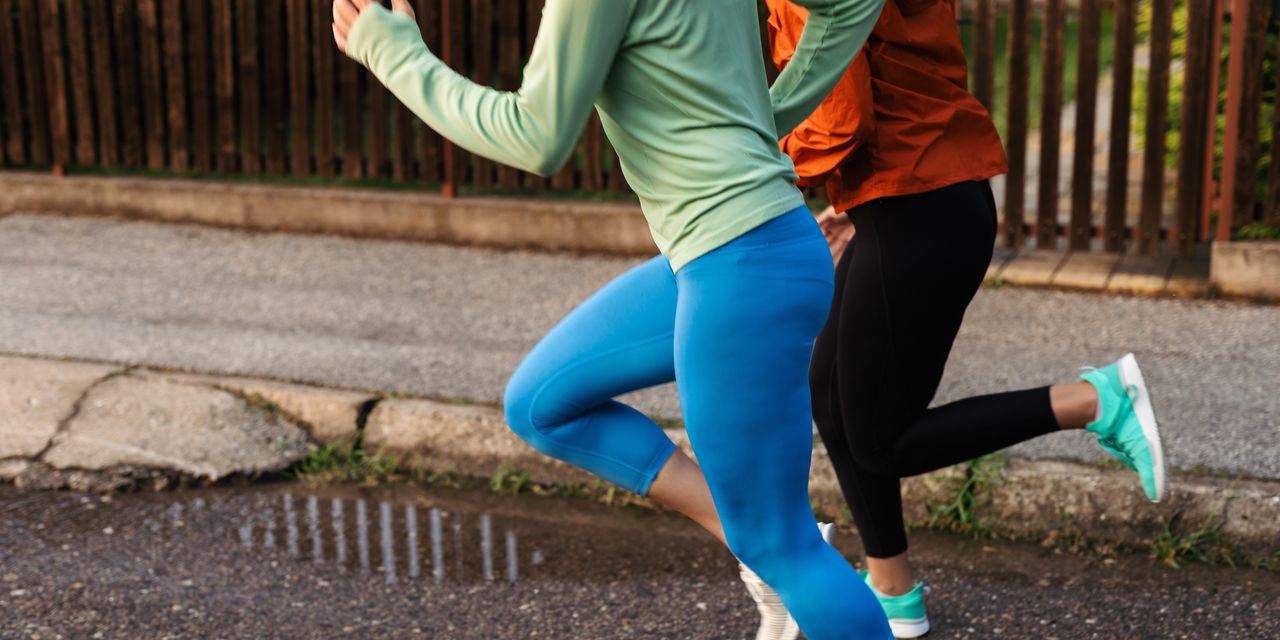
Thrift purchasing deserves each ounce of its present web buzz: It’s higher for the surroundings—and on your checking account. However whenever you’re looking for secondhand exercise garments, the germ skilled SELF consulted says it pays to be slightly extra discerning with these pre-loved yoga and working matches. Forward, our consultants break down a six-step course of for evaluating classic objects earlier than you haul them house.
Verify the tags
So that you’ve positioned the right second-chance windbreaker or yoga pants? Peek the tag, tailor Sarene Alsharif, CEO of Tad Extra Tailoring tells SELF. The kind of cloth you’re coping with can decide the longevity of the piece. Pure supplies, equivalent to cotton, merino wool, or bamboo—all of which final a very long time and have a tendency to take care of their shapes. Keep away from artificial supplies like spandex or nylon, which can stretch and sag over time.
Microbiologist and immunologist Jason Tetro, tells SELF, that natural materials are additionally much less more likely to be germy. “Micro organism and different microbes are inclined to connect to extra artificial materials over pure ones,” he explains. “Cotton and nylon are fairly good at resisting bacterial attachment. Nonetheless, acrylic and polyester are usually havens for micro organism. Wool is in between, though it tends to have antimicrobial properties. Similar with some kinds of bamboo,” says Tetro, creator of The Germ Recordsdata.
Think about the present situation
Now, it’s time to take an in depth have a look at what’s holding the garment collectively. “Particularly with leggings, you need to have a look at the stitching of the seat, crotch, and the highest of the thighs—that is the place there’s essentially the most pressure on it,” says Alsharif. “So in case you see stitches popping or empty areas the place there ought to be a sew, that signifies that the stitching is coming undone there.”
Verify the bigger swath of plastic on the waistband or the bottom of the sports activities bra, too, she provides. “While you pull on [the elastic], is it stretching out? Is it stretching out so much or just a bit bit? Generally, from the entire washing, the elastic can turn into stiff, and it isn’t going to stretch out,” explains Alsharif. Conversely, the elastic band could also be too free and saggy, so give it an excellent tug and test for that Goldilocks really feel.
Lastly, test for opacity. Whilst you could not have the ability to carry out the squat take a look at in-store, Alsharif recommends urgent a palm within the cloth to test for see-throughness. This can enable you keep away from by chance flashing anybody in yoga class or on the health club.
Carry out a sniff take a look at
If it smells funky on the rack, it’s not value including to your closet, medical pathologist S. Wesley Lengthy, MD tells SELF. Past being disagreeable, smells can point out the presence of lingering micro organism and sweat residue, he explains.
Keep away from intimate objects
“I’d not advocate shopping for used socks or undergarments for hygiene causes,” says Dr. Lengthy. “Socks and undergarments, for instance, have direct contact with delicate areas and could also be more durable to scrub completely, so buying them secondhand will not be advisable.” The identical goes for hats, which may comprise lice.
Is On-line Thrift Purchasing Okay?
It simply isn’t doable to carry out all these checks on Poshmark, ThredUp, and Depop—so what’s an internet thrifter to do? “I’ll be trustworthy. I’ve a tough time shopping for something used on-line,” says Tetro. “If it’s outerwear or one thing that can be utilized as an outer layer, I’m positive it is going to be high-quality. But when it’s going to the touch your pores and skin, I believe it’s higher to have the prospect to do the exams.”